
Our Food
PASTA
Pasta is one of the few things that is so readily available worldwide that it’s viewed as a basic commodity product. So what is important in making good pasta? Why is it important to make fresh pasta?
Fresh pasta has a completely different texture and taste than dried pasta. It incorporates itself with the sauce in a different way as well. Of course there is a place in the world for dried pasta, but it really is a different product. Comparing fresh pasta with dried pasta is the same as comparing fresh produce and canned or dehydrated produce. But there’s also an importance that goes beyond taste and texture. There's a tradition in making fresh pasta that somehow intangibly transfers into the food itself. It is a craft, much like real butchery. Making fresh pasta is paying homage to where this food came from and to supporting the local artisans and getting a unique and higher quality product.
Our pastas are made with many different types of flours. Some are sourced from local mills when possible, but many are imported from Italy. Using the right flour and mixing dough by hand lends itself to water and egg absorption in a way that can’t be replicated by faster techniques done by machines. When this dough is rolled out, it allows us to roll the pasta in a way that gives a specific texture - thinner or thicker, more or less chewy, more easily combined with fats like EVOO or cheese. All of the choices are made purposefully in order to provide a simple, fresh, and delicious meal at home.


Beef (Left Bank Butchery, Joyce Farms & Demkota)
Left Bank Butchery’s cows are raised entirely on pasture and live to be over two years old. This time in lush grass gives our beef great flavor and a level of marbling not often found on grass-fed beef. No meat benefits from good butchery more than the cow. With, “seam butchery” we pull out individual muscle groups. When we sell these as steaks and roasts, we can find you the right cut at the right price, and give you the right instructions to make a great meal.
Randelman Farm ~ Left Bank’s newest farm partner, a welcome addition to the collective of farmers raising animals holistically in Alamance County. Chad and Stephanie Randleman, along with Chad’s daughters Madison and Trinity, raise beef cattle, lamb and pigs on a combination of owned and leased land in Northern Alamance and Southern Caswell counties. They have a remarkable operation, rotating animals through pasture and woodlands and planting annual crops and grasses. Their animals are on pasture all day, and given supplemental feed consisting of hay, corn, and oats, all of which is grown and milled on farm.
Joyce Farms ~ Cattle for Joyce’s Heritage Beef spend their lives on a single farm in the Blue Ridge Mountains, pasture-raised on regenerative land and handled to high welfare standards. No antibiotics, no growth stimulants, no by-products, nothing artificial, ever.
Demkota Ranch ~ Cattle raised on native grasses in South Dakota and finished on a nutrient-rich blend of Midwestern grown corn and grains. This balanced diet enhances marbling and tenderness, delivering consistent flavor in every cut.
Pork (Left Bank Butchery & Cheshire Pork)
Cane Creek Farm ~ Eliza MacLean raises an assortment of different pigs on her farm, which is a combination of beautiful pasture and woods. The pigs feed on a diet of nuts, grubs, roots, and vegetation, along with a feed high in barley, which results in world class pork. The pigs share a life with goats, sheep, chickens, ducks, and turkeys and are also rotated through the gardens to rejuvenate the soil. Her line of Ossabaw Pigs (whose hams are hung for two years for prosciutto) make some of the finest charcuterie anywhere. Read more about the Ossabaw Island Hog and Cane Creek Farm.
The pigs at Cane Creek Farm are an assorted bunch, as the farm is always tinkering with different breeds and hybrids. This means that particular cuts may vary in size and coloring (there’s no white pork here!). But in all cases, our pork has great flavor, imparted by their lives on pasture and in woods, a diverse diet, and old-time genetics. Our pigs live twice as long as conventional pigs (and yet are smaller), and as with all animals (and most foods), the longer the time, the richer the flavor.
Cheshire Pork ~ The Ivey Family fell in love with the Chester White heritage breed hog 40 years ago with a goal to produce the best pork possible. They have been raising pure-breed heritage hogs in Seven Springs, NC ever since for the exceptional rich and wonderful taste that these hogs produce.

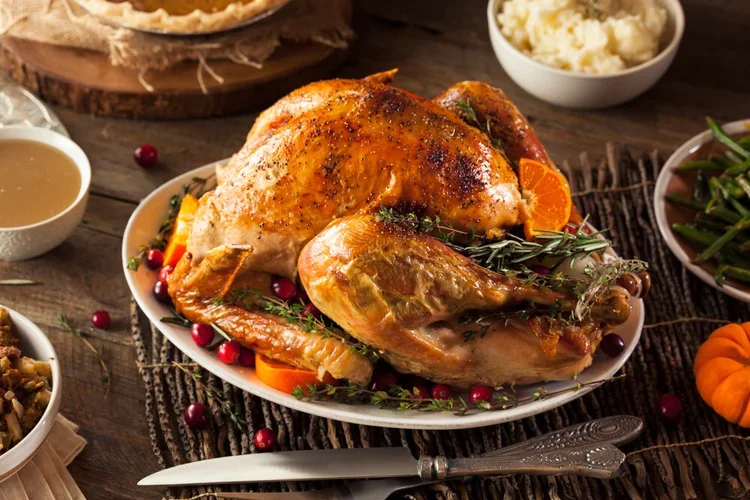
Poultry (Joyce Farms)
Their Naked Duck is tender and succulent, with a delicate flavor and genetics that trace back to China’s Ming Dynasty. The Poulet Rouge, a slower-growing heritage breed, is the only authentic genetic line of chicken from the French Label Rouge program here in the U.S. Consistently moist and always delicious, Joyce Farms’ Naked and Poulet Rouge birds are raised with nothing added EVER. That means no growth stimulants, no hormones, no antibiotics or other drugs, no pesticides, and no preservatives EVER.